
Where Oregon Historical Records Live
For older Department of Corrections material, the Oregon State Archives is the place to begin. Its corrections guide spans 1854 through 1983. Registers, admission and discharge records, and case files are all named there. Photos are not guaranteed. County jail photographs usually stay with the sheriff. They can also sit with a police department, jail, or regional authority that created them.
The Archives search service only indexes records from jurisdictions that opt in. This instance holds Secretary of State records. It is not a full index of corrections files or county booking photos. Find a likely series in the guide, then contact the repository that keeps it. Oregon's Archives search interface offers a form for searching participating records. The form itself is what the screen shows, not a name search.
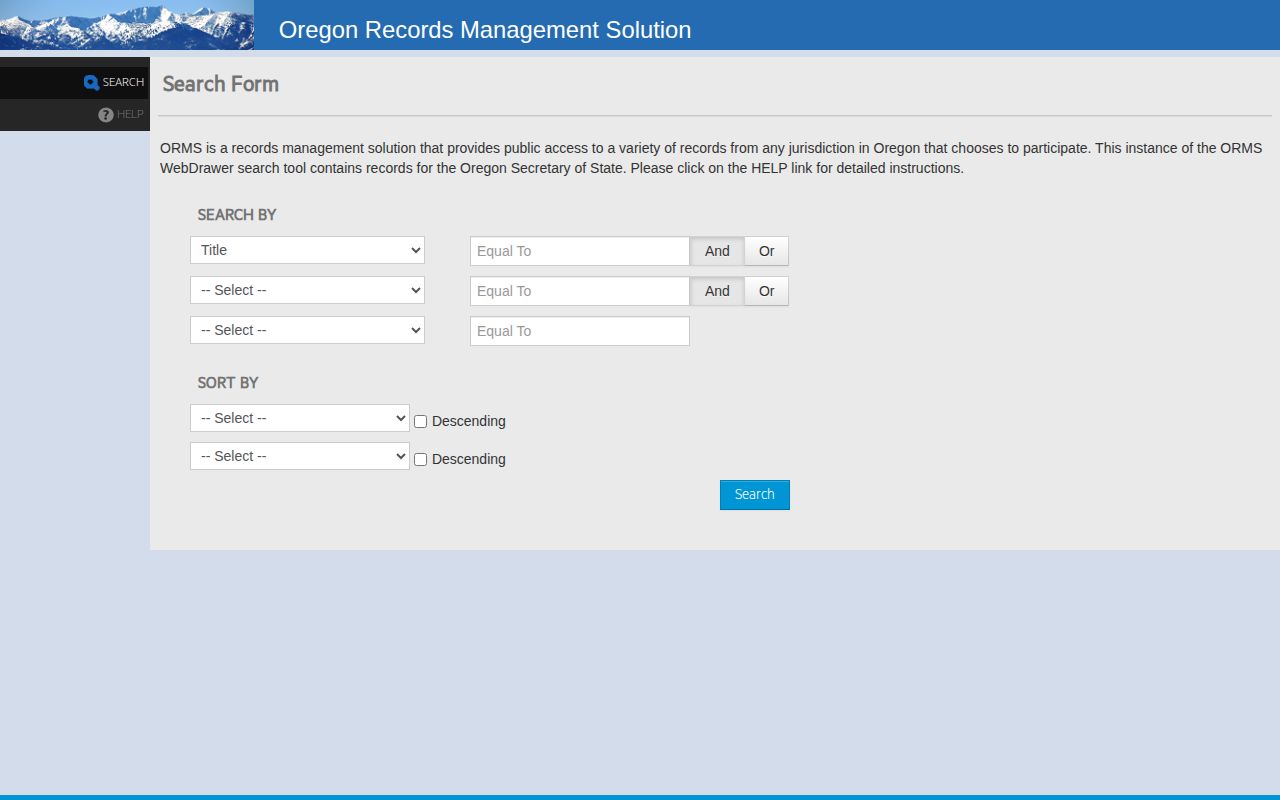
A hit in the index only points toward a series. Archives reference staff, working with the guide, can confirm whether an item exists and whether you may see it.
Oregon Corrections Archive Collections
Several series in the State Archives guide help piece together past custody. Each record group carries its own dates. There is no universal mugshot collection. A register or case file can tell much of the story yet hold no photograph at all.
| Collection | Repository | Era covered | How to access |
|---|---|---|---|
| Inmate case files | Oregon State Archives | 1853–1983, with a large 1890–1920 bulk | Find the series in the corrections guide; ask reference staff about a file. At least one file is identified with a photo and negative. |
| Penitentiary inmate registers | Oregon State Archives | 1854–1946 | Search the guide by series name and date. |
| Prisoner Register | Oregon State Archives | 1881–1894 | Use the guide's series description to request a volume or entry. |
| Convict Records | Oregon State Archives | 1915–1921 | Search by series title, name, and likely year. |
| Inmate admissions and discharges | Oregon State Archives | Dates vary by series | Ask staff which “received or released” record covers the date. |
| Rogues Gallery Register | Oregon State Archives | 1891–1898 | Use the historical series title when asking for a reference. |
| Federal Prisoner Roll | Oregon State Archives | 1889–1905 | Search the corrections guide by its exact series name. |
| Inmate description/history registers and description cards | Oregon State Archives | Late 19th to early 20th century registers; cards dated 1965–1985 | Ask about each series; the cards are restricted. |
These collections cover state corrections records only. They are not a statewide county-jail booking archive. The guide does flag at least one case file with a photograph and negative, but it never promises an image for every name or file.
Oregon's Oldest Mugshot Trail
Chasing Oregon's oldest mugshot starts with the records. It means a corrections register, a case file, or a description card. The DOC records guide lists penitentiary registers and admission and discharge books. It also names inmate case files, description and history registers. A record can prove someone entered or left custody without holding any photo. At least one case file with a photo and negative is identified. No image is promised for every person, though. Inmate Description Cards dated 1965–1985 sit under restriction. Ask Archives staff about the exact series and its access rule before expecting a scan. The "Rogues Gallery Register" is a historical collection title, nothing more.
Any image pulled from a historic series needs its date, institution, collection, and source attached. It describes a past record only. It cannot reveal current custody, wanted status, or a later court result.
Oregon Mugshot Retention Rules
A retention schedule says how long an agency keeps a record. It covers transfer and destruction dates too. It does not control how long a page stays online. Nor does a state corrections schedule govern every county jail image. When a particular photo or booking file is at stake, check with the custodian that created it.
| Record group | Schedule detail | What it does not prove |
|---|---|---|
| DOC identification documents | The state schedule lists photographs, mugshots, and tattoos as permanent and provides for transfer to State Archives 75 years after discharge. | It does not promise that a public DOC search displays a photo forever. |
| DOC face sheets | The schedule distinguishes permanent first and last face sheets from other face sheets with shorter retention. | It does not make each face sheet or image publicly available. |
| County booking records | The general schedule covers confinement/release books, logs, and related records. Its minimums vary: ten years for felony records, five for misdemeanor records, and longer for homicide records. | A retention minimum is not a web-publication rule or a photo-specific guarantee. |
The DOC retention schedule covers permanent identification records and transfer timing. Public entities can turn to the Archives' own records-management guidance. A county may keep a nonpublic image. It can still post a roster without photos. A third-party copy can even outlive an official interface.
Note: A retention period controls an agency's recordkeeping duty, while access and public display depend on other law and agency practice.
Request Oregon Archive Records
Keep the request narrow. Ask for one record series, not every photograph in the building. Staff may supply a scan or copy. They may also set an appointment or quote a fee. A restriction may apply instead. Or staff may point you to the agency that actually holds the record. Time, format, cost, and access all hinge on the item.
- Search the Archives interface and the DOC corrections guide for a likely series or accession.
- Write down the person's full name and known aliases, approximate dates, institution, county, and the exact record sought. Add a case, booking, or SID number if known.
- Ask Archives reference staff about the series, box, or accession and whether it is open. Use the services and fees page for the current reference and copy process.
- If the DOC record remains with the agency, submit a request through the DOC Public Records Center. Describe one record type and date range; the office may provide an estimate or explain a redaction.
- For a county-jail record outside the State Archives, contact the original sheriff, police department, jail, or regional authority through its records route.
DOC's public-records page lays out its request center, mail route, and Pen Pack for selected public documents. The screenshot shows the official request page, a path for DOC-held material rather than proof that every historic record sits there. Oregon DOC Public Records lists the agency's request options.
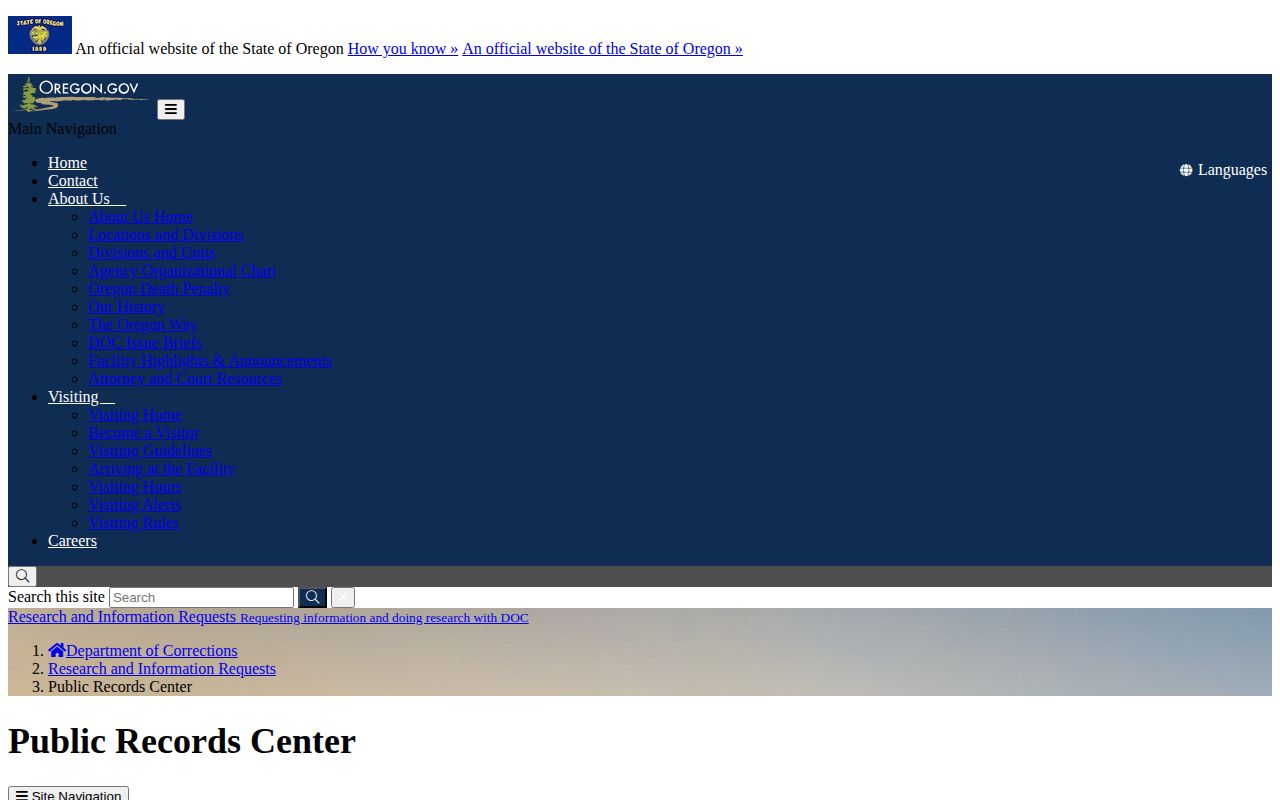
Name the exact item: a photo, face sheet, case file, or discharge record. Then let the custodian decide what can be released.
County Jail Mugshots Stay Local
County booking photos rarely travel to the state level. The Oregon State Archives holds corrections history. It is not, however, a warehouse for local mugshots. Those images usually stay with the sheriff, a police department, the jail, or a regional authority. The agency that booked someone can differ from the place where a sentence was later served, so identify the creator of the record before you ask.
Local requests go better with details. Give the records office a date range, the person's name and known aliases, a booking or case number, and the exact record sought. Say whether you want a booking sheet, a photograph, a log, or a release entry. A roster with no images says nothing about nonpublic copies. Oregon law also restricts law-enforcement release of booking photos. Preservation alone never guarantees public access.
No result does not settle the question. Ask whether the search covered the right date range. Ask whether another agency or record series holds the file. Material can be restricted, unprocessed, lawfully destroyed, or filed under a different name entirely. A single empty search service proves very little.
Oregon Court Outcomes
An old arrest file shows custody, not outcome. For what a court decided, use the Oregon Judicial Department's case-record route. Match the court, county, case number, and charge. A name alone can point to the wrong person. The risk is worse with common names. Older files also carry variant spellings. The Oregon eCourt portal is the public case-search entry point. The portal's access screen appears below, not any docket or warrant status.
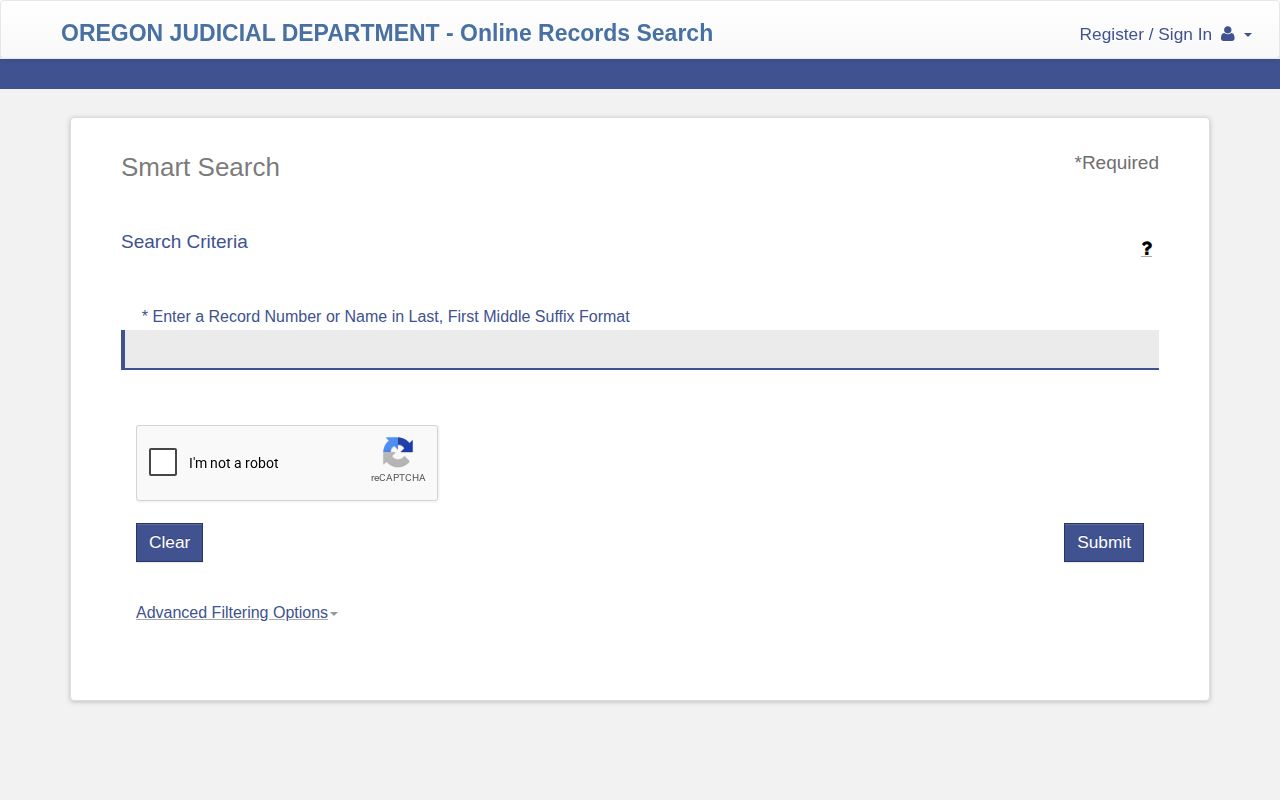
Use a case number whenever one exists. Then read the docket entry and its date in context. Court search can locate public case information. But it cannot promise that every historic matter is online. Nor can it promise that a warrant is still active. OJD's case-record guidance explains the available search and court-record routes. The screenshot shows those public access instructions and caveats.
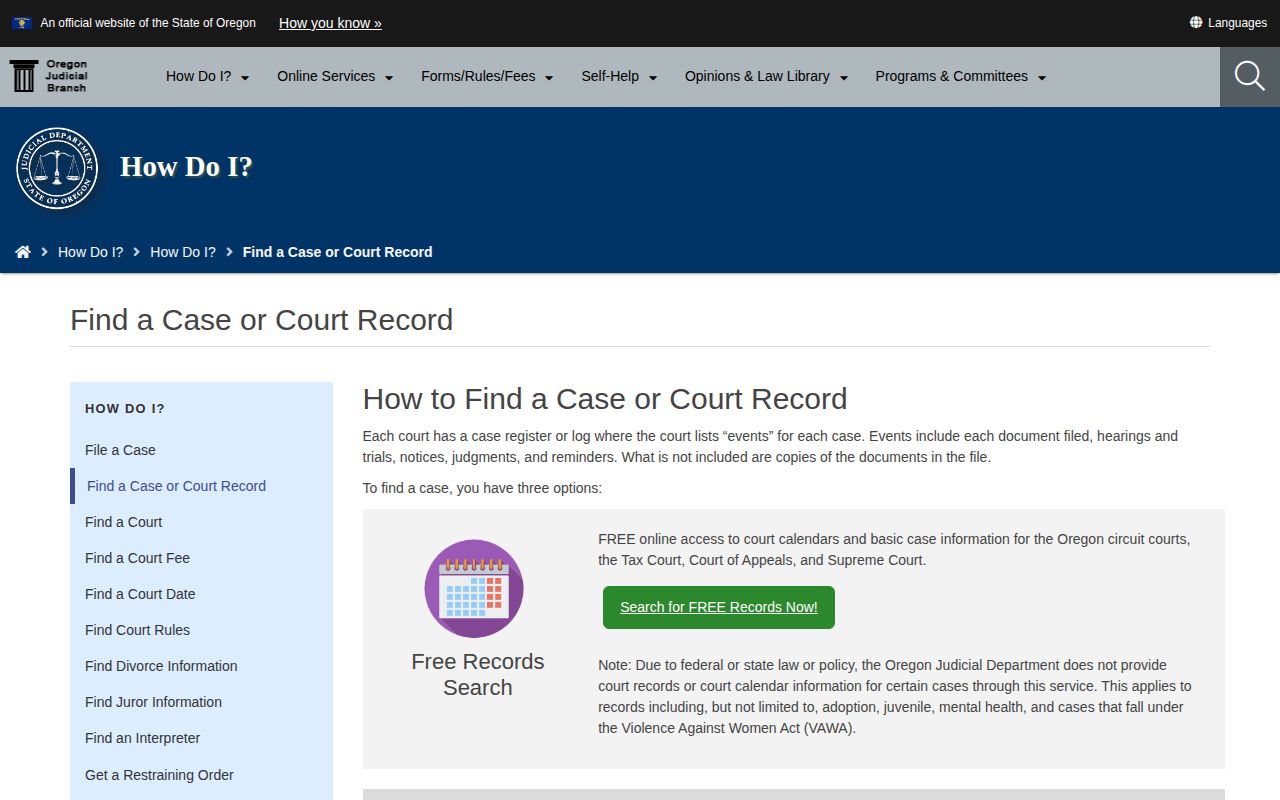
Juvenile, sealed, and confidential matters often stay off public search. Ask the court about its copy process. Use it when a docket is incomplete or a document is not online. A booking record and a court disposition remain separate records. They were made for different purposes.
Recent Records and Archives
Fresh cases start locally. Recent bookings begin with a current county roster or the arresting agency. Older state-prison material may sit instead in the Archives collections or with DOC. The Oregon County Directory maps the local agency routes. The Oregon statewide records hub lets you compare the county, DOC, court, and federal paths. Time changes what a search shows. A current roster may drop a person after release. An archive catalog may describe only a paper register or case file. Third-party copies can outlast an official page. So record the source and the date you searched. Confirm any important detail with the office that created the record.
Anchor a historic photo to its date and institution. Keep any known disposition distinct from the old custody record. It cannot show present custody or a current warrant.